Hurricane Preparedness in Pinellas County
Living in Pinellas County means enjoying some of the most beautiful coastline in Florida. It also means that every June, hurricane season becomes part of our shared calendar. The good news is that preparation does not have to be stressful or overwhelming. With a little planning done early, most of the work is behind you before a storm ever appears on the radar. Your home is likely your biggest investment, and a few thoughtful steps now go a long way toward protecting it.
Atlantic hurricane season runs from June 1 through November 30, and the most effective preparation happens well before any storm is named. This guide walks through the essentials so you can approach the season feeling informed and ready, not anxious.
If you do only one thing after reading this post, look up your evacuation zone. Pinellas County uses zones A through E based on storm surge risk, and knowing your letter is the foundation of every other decision you will make. Zone A includes much of our beach communities, including Clearwater Beach, Belleair Beach, Madeira Beach, St. Pete Beach, and Treasure Island. If you live or own property in these areas, plan as though a Zone A evacuation order applies to you.
Here is why this matters so much: storm surge, not wind, is the most dangerous threat in Pinellas County. Because we sit on a narrow peninsula, water can rise quickly and evacuation routes can flood. Understanding your zone tells you whether your plan should center on leaving early or sheltering safely at home. You can find your zone in minutes at pinellas.gov/evacuationzones, and I encourage you to write it down somewhere you will remember.
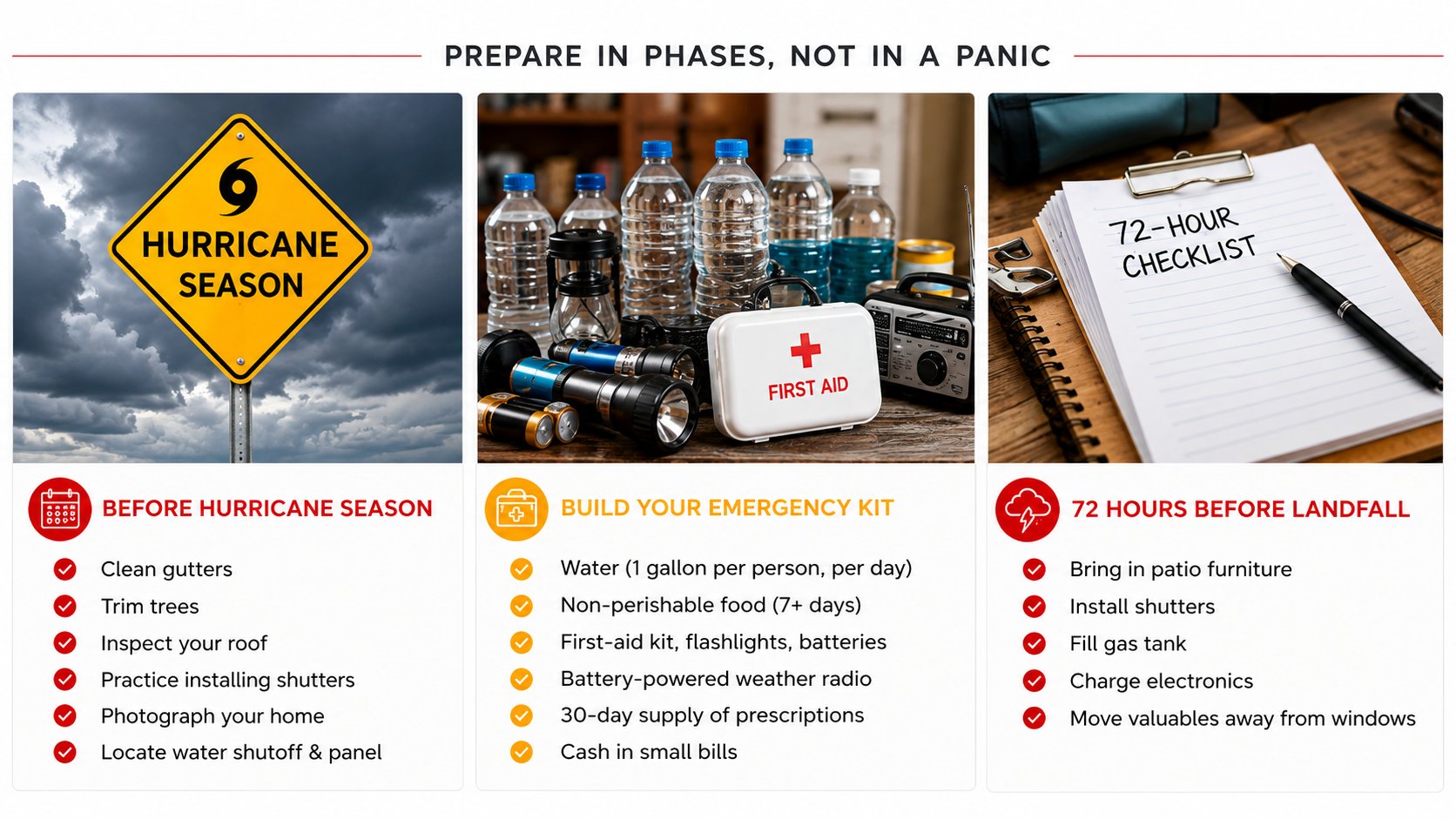
The most manageable way to get hurricane ready is to spread the work across a simple timeline. Early in the season, focus on your property itself. Clean gutters, trim trees, check your roof for loose shingles, and do a practice run installing your shutters or panels. This is also the time to photograph your entire property for insurance documentation and to confirm you know where your water shut-off valve and electrical panel are located.
At the same time, build your supply kit gradually. A well-stocked kit includes:
If a storm does approach, the final 72 hours are for last steps: bringing in patio furniture, installing shutters, filling gas tanks, charging electronics, and moving valuables away from windows. Because you did the heavy lifting early, these final days become a short list rather than a scramble.
This is the step homeowners most often overlook, and timing matters. Homeowner's insurance and flood insurance are separate policies in Florida, and many owners discover coverage gaps only after a loss. Flood policies through the National Flood Insurance Program carry a mandatory 30-day waiting period before coverage takes effect, so a policy purchased when a storm is forming will not help you. Call your agent now, review both policies, and ask specifically about flood coverage even if you are outside a high-risk zone. More than 20 percent of NFIP claims come from low-to-moderate risk areas.
In a storm, where you get your information matters. Alert Pinellas is the county's free emergency notification system, and registering takes just a few minutes at pinellas.gov/alert-pinellas. You will receive official alerts by phone, text, and email. For coverage and forecasting, our trusted local stations are Bay News 9, WFLA News Channel 8, and WTSP 10 Tampa Bay, and the National Hurricane Center at nhc.noaa.gov remains the primary authority for storm advisories.
Thousands of Pinellas County property owners live elsewhere for part or all of the year, and you can absolutely be well prepared from a distance. The single most valuable step is establishing a trusted local contact, whether a neighbor, a property manager, or your real estate advisor, who has a key and can be reached at any hour. Permanent protection such as impact-resistant windows or roll-down shutters is especially worthwhile for absent owners, and smart cameras with battery backup let you check on your property before and after a storm. Your evacuation zone still matters even when you are away, since it affects tenants, caretakers, insurance claims, and re-entry timing.
Hurricane preparedness in Pinellas County is not about fear. It is about respect for where we live and confidence in your plan. Most seasons pass with little more than a few watchful days, and the homeowners who prepare early are the ones who spend those days calm rather than rushed.
For the complete timeline-based checklist, local emergency contacts, shelter information, and resources for out-of-state owners, visit my full Pinellas County Hurricane Preparedness Guide. And if you would like to talk through preparing your specific property, I am always happy to help, no obligation and no pressure.
Karen Crotty is a Real Estate Advisor and REALTOR® with Engel & Völkers Belleair, serving buyers and sellers throughout Pinellas County. This post is for informational purposes only and does not constitute legal, insurance, or emergency management advice. Always follow official Pinellas County Emergency Management guidance during an active storm event.
Whether you’re buying your first home, selling a trust property, or navigating a probate sale, my goal is always the same: to provide honest guidance, strong advocacy, and a smooth experience from beginning to end. Real estate is about people, not just properties. I would be honored to help you take your next step.

KAREN CROTTY
2510 West Bay Dr Belleair Bluffs, FL 33770